
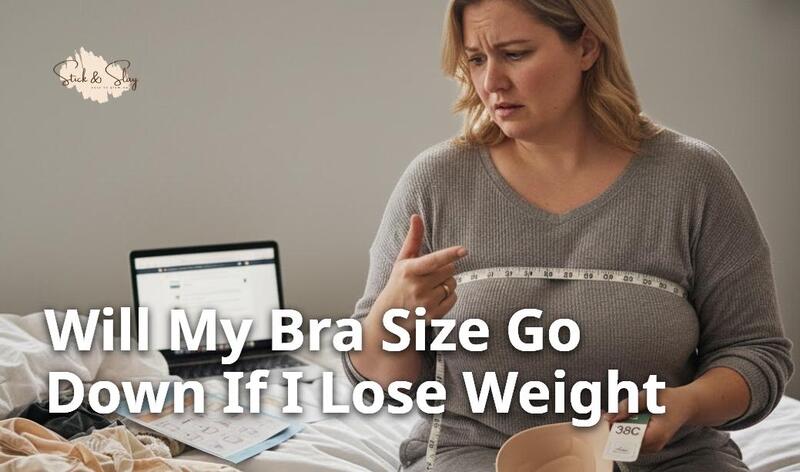
Will My Bra Size Go Down If I Lose Weight?
If you have a larger bust, this question probably isn’t just curiosity, it’s personal.
When I started losing weight, I wasn’t worried about the number on the scale as much as I was worried about my bras. Would my cup size disappear? Would I still need heavy support? Would everything feel… different?
The short answer is yes, your bra size can go down when you lose weight, but how it changes, and how it feels, depends on several factors. And if you wear a larger size, the experience can be very different from what most generic advice online suggests.
This article shares both science-backed facts and real-world experience, especially for women with fuller busts.
Why Bra Size Often Changes With Weight Loss
From experience and professional fittings, one thing is clear: bra size changes are normal during weight loss.
Breasts Contain Fat , But Not Only Fat
Breasts are made of:
- Fatty tissue
- Glandular (dense) tissue
When you lose weight, your body burns fat everywhere, including the breasts. If your breasts are higher in fat content, you’re more likely to notice a reduction in volume.
However, women with denser breast tissue (which is common in larger cup sizes) may see less dramatic cup size changes, even with significant weight loss.
Band Size vs. Cup Size: What Usually Changes First
Band Size Almost Always Goes Down
One of the first changes most women notice is a looser band. Weight loss reduces fat around the ribcage, so going down one (or even two) band sizes is very common.
For example:
- 38 → 36
- 40 → 38
This alone can make your bras feel unsupportive, even if the cups still seem fine.
Cup Size Changes Are Less Predictable
Here’s where things get confusing.
Some women lose both band and cup size. Others lose band size but keep similar breast volume. That’s how someone can go from:
- 38D → 36DD
The cup letter went up, but the actual breast volume stayed nearly the same. This is why relying only on the cup letter can be misleading.
Why Large-Busted Women Experience Weight Loss Differently
Genetics and Breast Density Matter More Than You Think
If you’ve always had a fuller bust, even at lower weights, your breasts likely contain more glandular tissue. In that case:
- Weight loss may reduce fullness slightly
- Shape may change more than size
- Support needs remain high
This matches what many women with large busts experience: the scale changes, but the need for strong bras does not.
How Weight Loss Can Change Breast Shape (Not Just Size)
This is the part no one really warns you about.
Skin Elasticity and Gravity
With weight loss, especially rapid loss, skin doesn’t always bounce back at the same pace. Many women notice:
- Less upper fullness
- More softness
- A lower breast position
This doesn’t mean anything is “wrong.” It just means your bras may need to do more work than before.
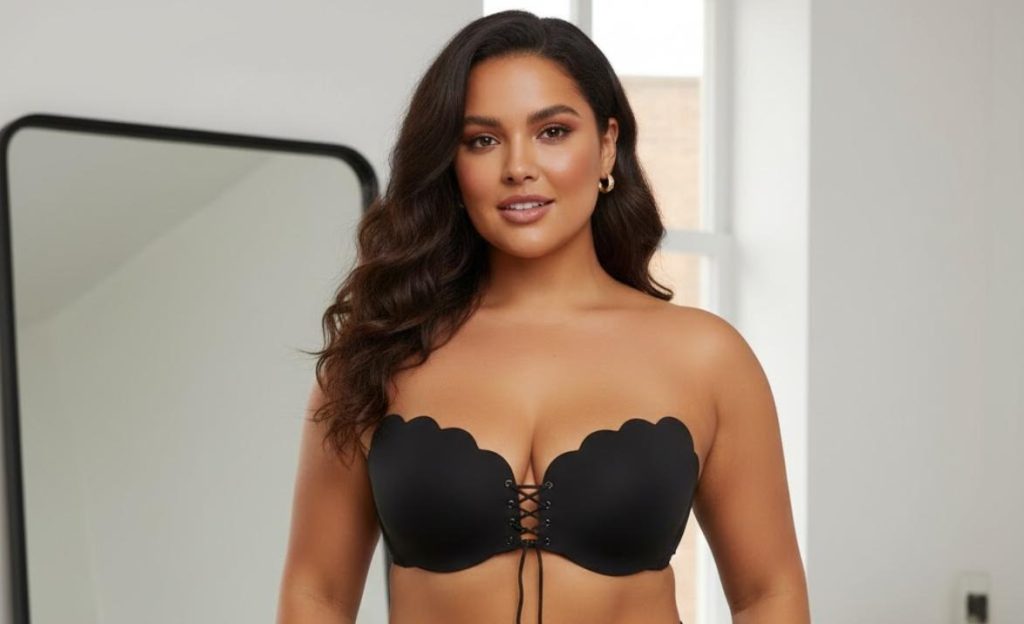
That’s often when alternative solutions like strapless or adhesive options come into the conversation. Brands like Stick & Slay focus on modern solutions designed to work with changing bodies rather than against them.
What I Learned About Buying Bras While Losing Weight
Get Re-Fitted More Often Than You Think
From both personal experience and professional advice: get fitted every 2–3 months during active weight loss. Even small changes affect comfort and support when you have a large bust.
Don’t Replace Your Entire Bra Drawer Too Soon
This was one of my biggest mistakes.
Instead:
- Buy 1–2 well-fitting bras at a time
- Use extenders or adjustable styles
- Avoid expensive “final size” bras until weight stabilizes
Are Adhesive Bras an Option for Large Busts During Weight Loss?
Surprisingly, yes, with the right expectations.
Many women with larger breasts assume adhesive bras aren’t for them. But during weight loss, when:
- You want lighter support
- Your band size keeps changing
- You’re dressing for events or special outfits
Adhesive bras designed specifically for fuller busts can be useful. You can see examples of bras for large breasts here.
Read more: Are Adhesive Bras Safe? An Experience-Based Guide for Women
Can Exercise Prevent Breast Size Loss?
Exercise can’t stop fat loss in the breasts, but it can help with shape and support.
Strength Training Helps With:
- Chest muscle tone
- Better posture
- Improved lift appearance under bras
It won’t increase cup size, but it can make bras fit and feel better as your body changes.
Frequently Asked Questions
Will My Bra Size Always Go Down If I Lose Weight?
No. Many women lose band size without losing much cup volume, especially if they have dense breast tissue.
How Much Weight Loss Causes a Bra Size Change?
There’s no fixed number. Some notice changes after 10 pounds, others after 20+ pounds.
Can My Cup Size Increase After Weight Loss?
Yes, if your band size decreases faster than breast volume, your cup letter may go up.
Final Thoughts: Focus on Fit, Not the Label
If there’s one thing weight loss taught me, it’s this: the number on your bra tag matters far less than how supported you feel.
For women with large busts, weight loss doesn’t mean you suddenly need less support, it means you need different support. Stay flexible, get fitted often, and choose solutions that adapt as your body does.
Your body is changing. Your bras should change with you.
For further reading: Are Adhesive Bras Reusable? Honest Answer From Stick & Slay